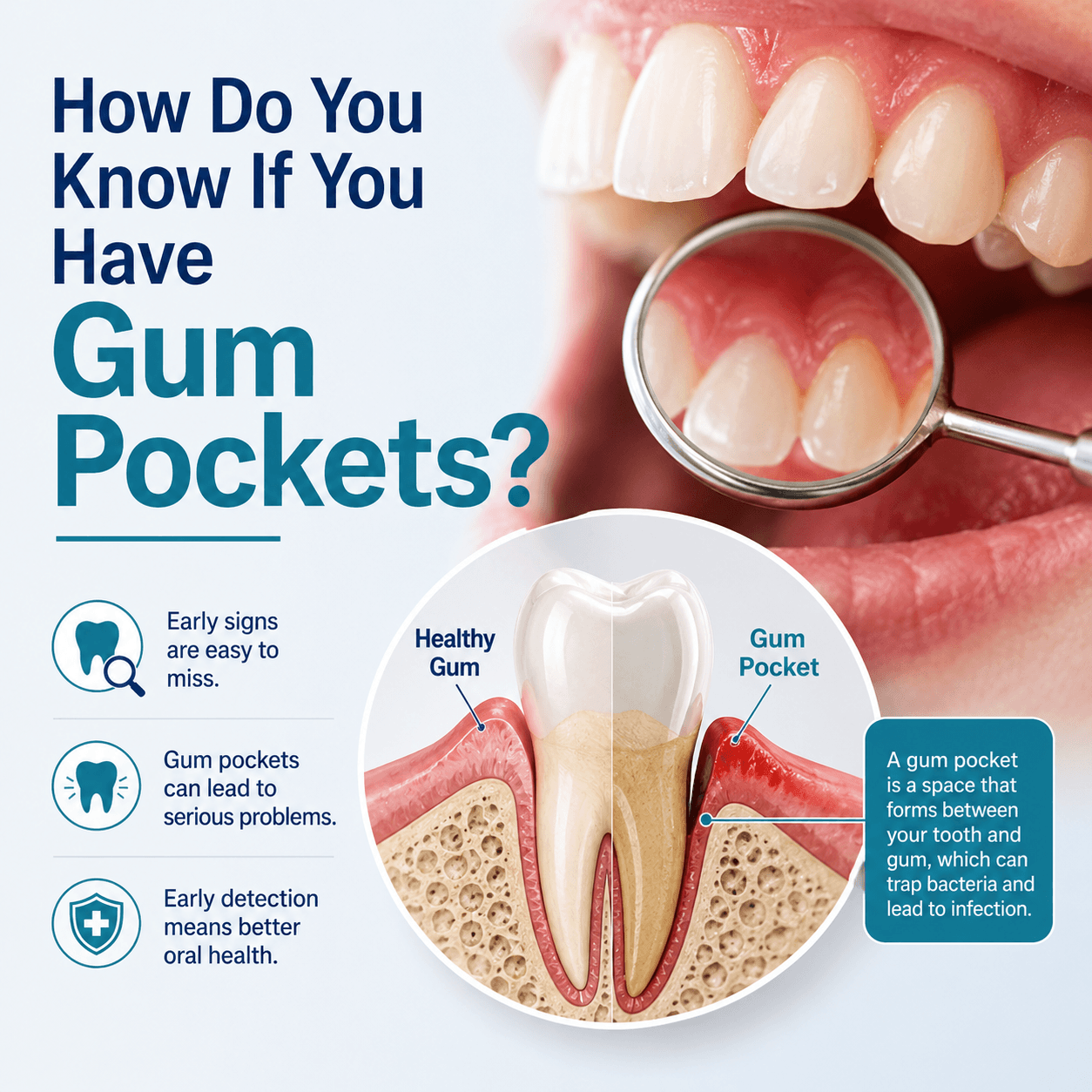
The Short Answer: Pockets in the gums, medically known as periodontal pockets, are spaces or openings under the gumline. They form around your teeth and collect bacteria. These periodontal pockets are caused by plaque bacteria destroying the bone and tissue supporting your teeth. Healthy gum sulcus depth is between 1 to 3 millimeters. Any depth of 4 millimeters or more indicates gum disease. This depth requires quick intervention to help prevent tooth loss.
How Do Periodontal Pockets Form?
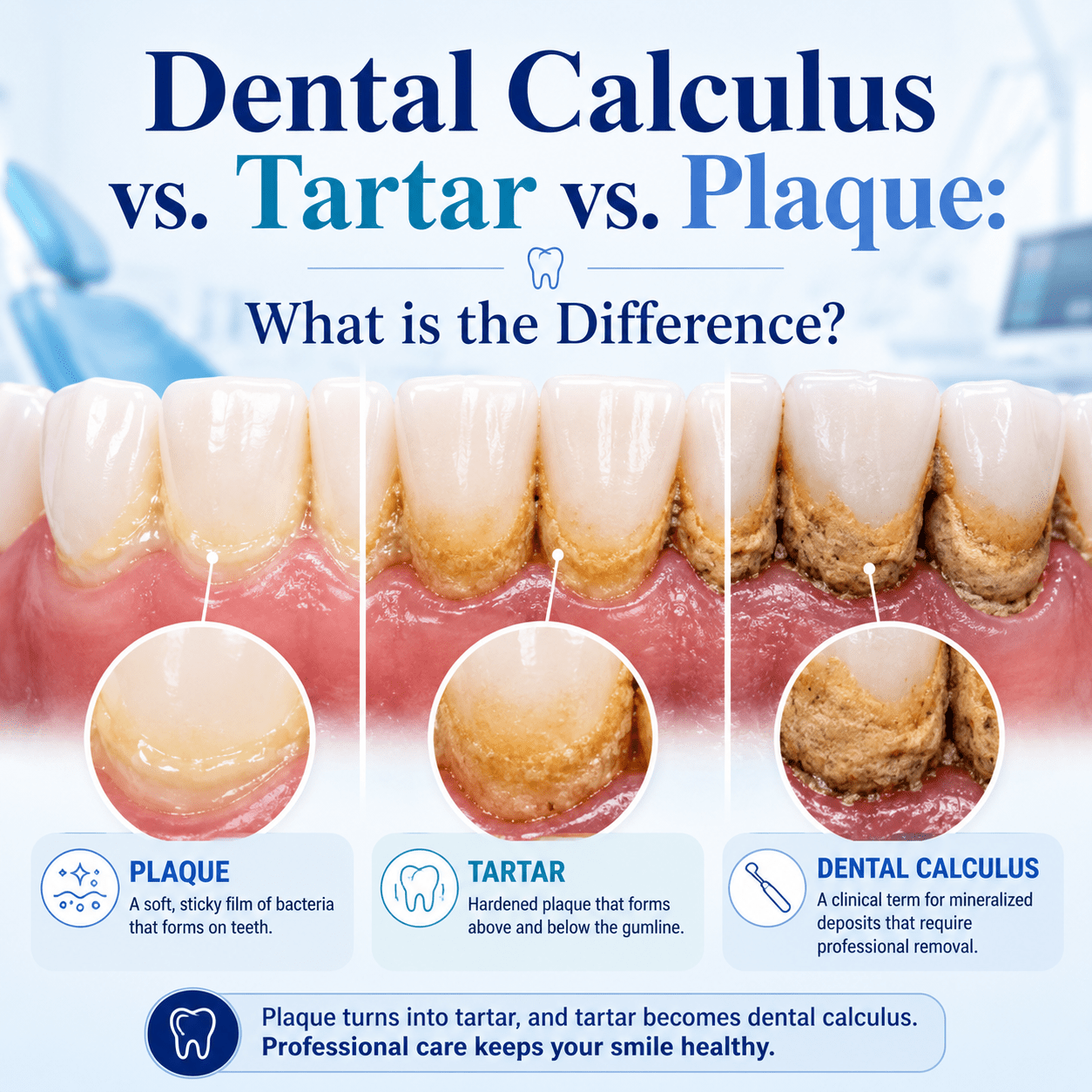
To understand how to stop your gums from bleeding and heal these pockets, you must understand how they form. It all starts with plaque—a sticky film of bacteria that constantly forms on your teeth.
According to the Mayo Clinic, if plaque is not removed, it hardens into tartar (calculus). This happens when daily brushing and flossing are incomplete. This tartar harbors even more bacteria, causing persistent inflammation in your gums (gingivitis). Over time, this chronic inflammation causes your gums to pull away from your teeth. This process creates deep spaces—periodontal pockets—where even more bacteria can thrive. These bacteria hide completely out of reach of a regular toothbrush.

Symptoms: How Do You Know If You Have Gum Pockets?
Periodontal disease is often called a "silent disease" because it can be painless in its early stages. However, warning signs include:
- Bleeding Gums: Especially when brushing or eating hard foods.
- Persistent Bad Breath (Halitosis): Caused by trapped bacteria rotting inside the deep pockets.
- Gum Recession: Teeth appearing longer than they used to.
- Loose Teeth: In advanced stages, as the supporting bone is destroyed.
How to Shrink Periodontal Pockets and Stop Bleeding
Many patients ask: How to cure periodontal disease? The clinical truth is that advanced periodontitis cannot be entirely "cured" at home. It must be professionally managed by a dentist. The first step is visiting a dentist for a professional deep cleaning. This procedure is called scaling and root planing. It removes tartar from deep within the periodontal pockets.

However, the success of your recovery depends entirely on your daily home care. This is where standard tools often fail.
Research published by the National Institutes of Health (NIH) shows traditional string floss has limits. It can only clean about 1 to 2 millimeters below the gumline. If your pockets are 4 to 6 millimeters deep, string floss cannot reach the destructive bacteria. These bacteria are the ones damaging your bone.
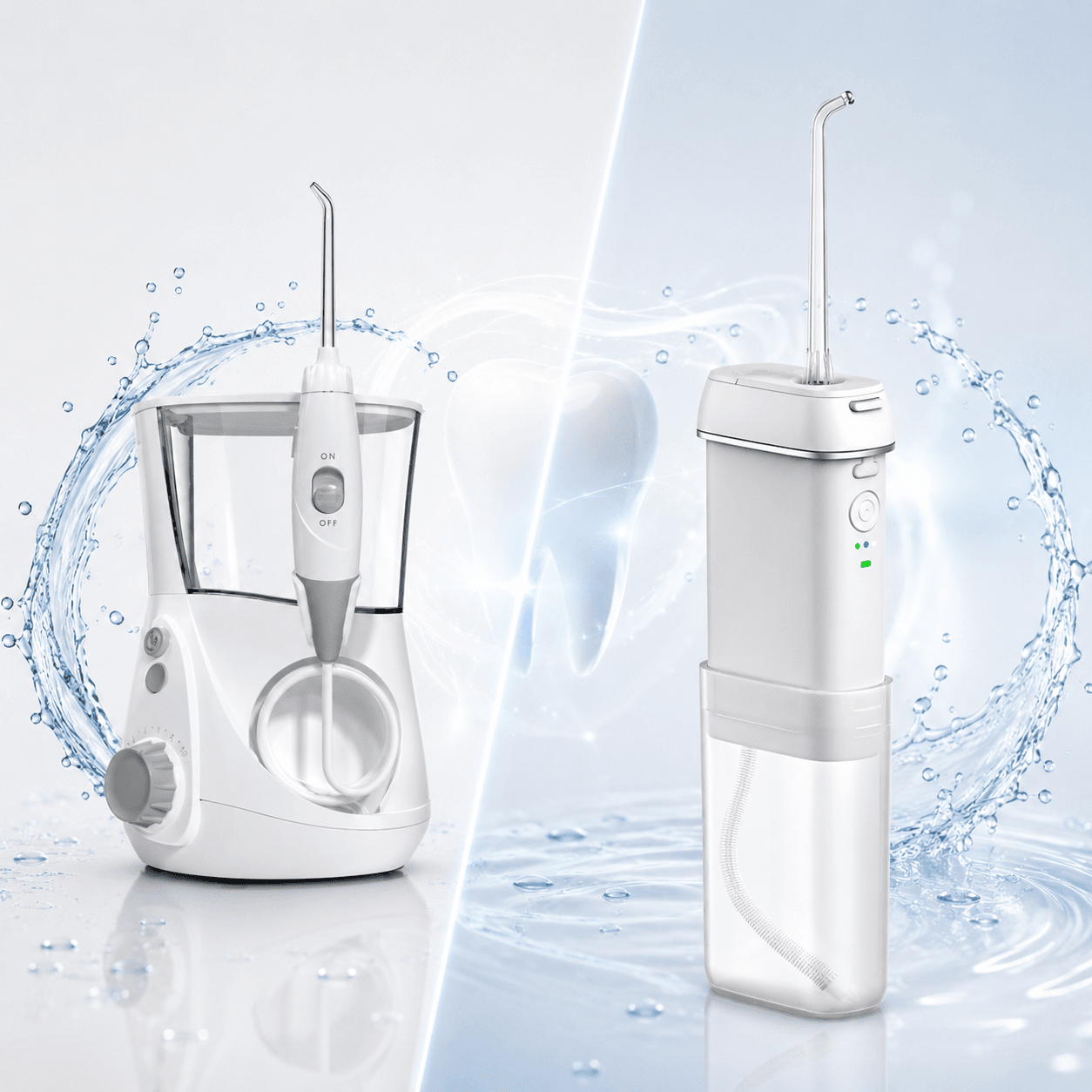
The Role of Hydrodynamic Therapy: To effectively flush out deep periodontal pockets, professionals recommend oral irrigators (water flossers). A pulsating stream of water can safely penetrate up to 6 millimeters into the periodontal pocket. It flushes out anaerobic bacteria and food debris that traditional methods leave behind.
For patients dealing with gum disease, tools like the SYNHOPE M6P offer an effective home-care solution. It generates 1,200 high-frequency water pulses per minute. This provides the hydrodynamic shear force needed to disrupt subgingival plaque. The M6P also features a dedicated "Soft" mode (40 PSI) for tender, bleeding gums. This mode gently massages inflamed tissue to stimulate blood flow and healing. It avoids causing additional trauma.

Frequently Asked Questions
Q: What is a periodontal pocket exactly? A: A periodontal pocket is an abnormally deep space between the tooth and surrounding gum tissue. It measures 4mm or greater in depth. It is caused by destruction of supporting bone and ligaments by bacterial plaque.
Q: How to stop my gums from bleeding when I floss? A: Bleeding gums are a sign of inflammation, also called gingivitis. The best way to stop the bleeding is thorough cleaning. You must remove the bacteria causing the irritation. Switching from string floss to a gentle water flosser can help. Use a low-pressure setting to protect sensitive tissues. This can effectively clean the area and reduce bleeding over a few weeks.
Q: Can gum pockets shrink naturally without surgery? A: Pockets that are 4mm to 5mm deep can often shrink back to healthy levels. Healthy pockets usually measure 1 to 3mm. This improvement comes from professional dental scaling and strong daily home care. Home care includes brushing and using a high-quality water flosser. Deeper pockets, measuring 6mm or more, usually require advanced periodontal treatment.