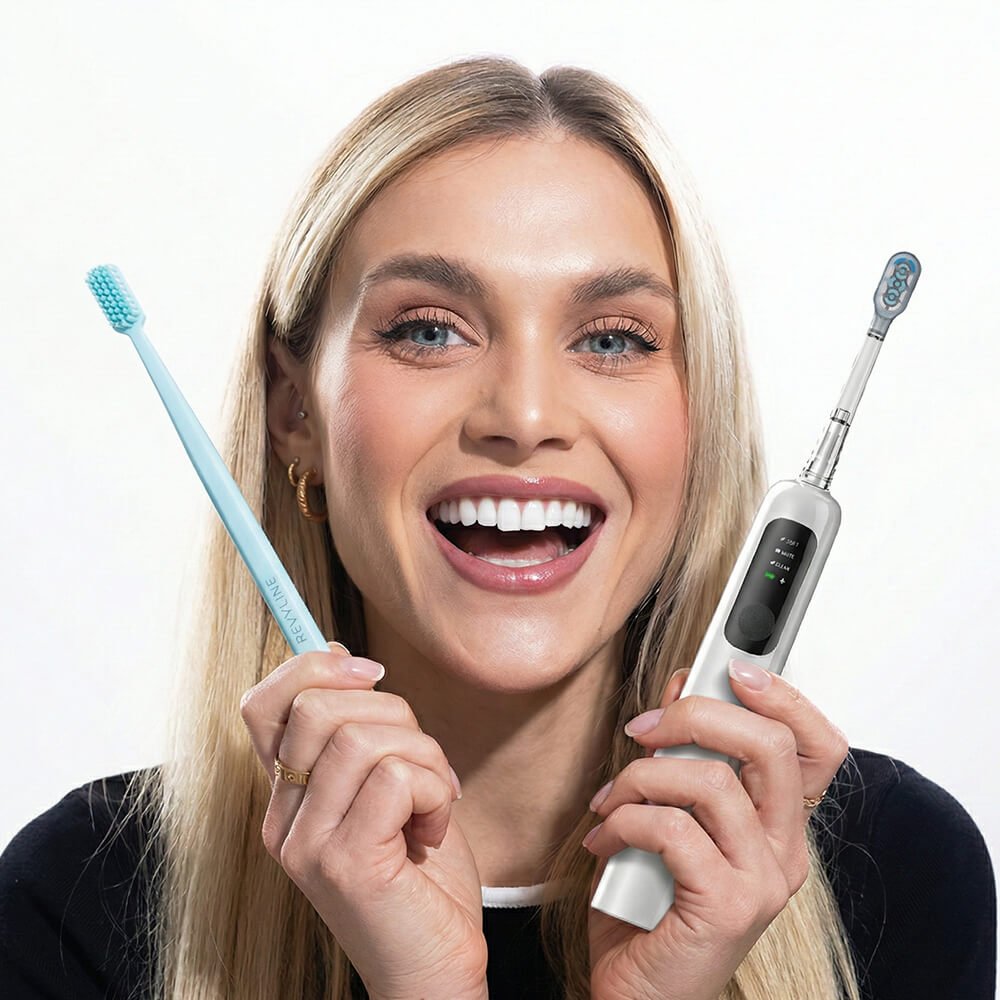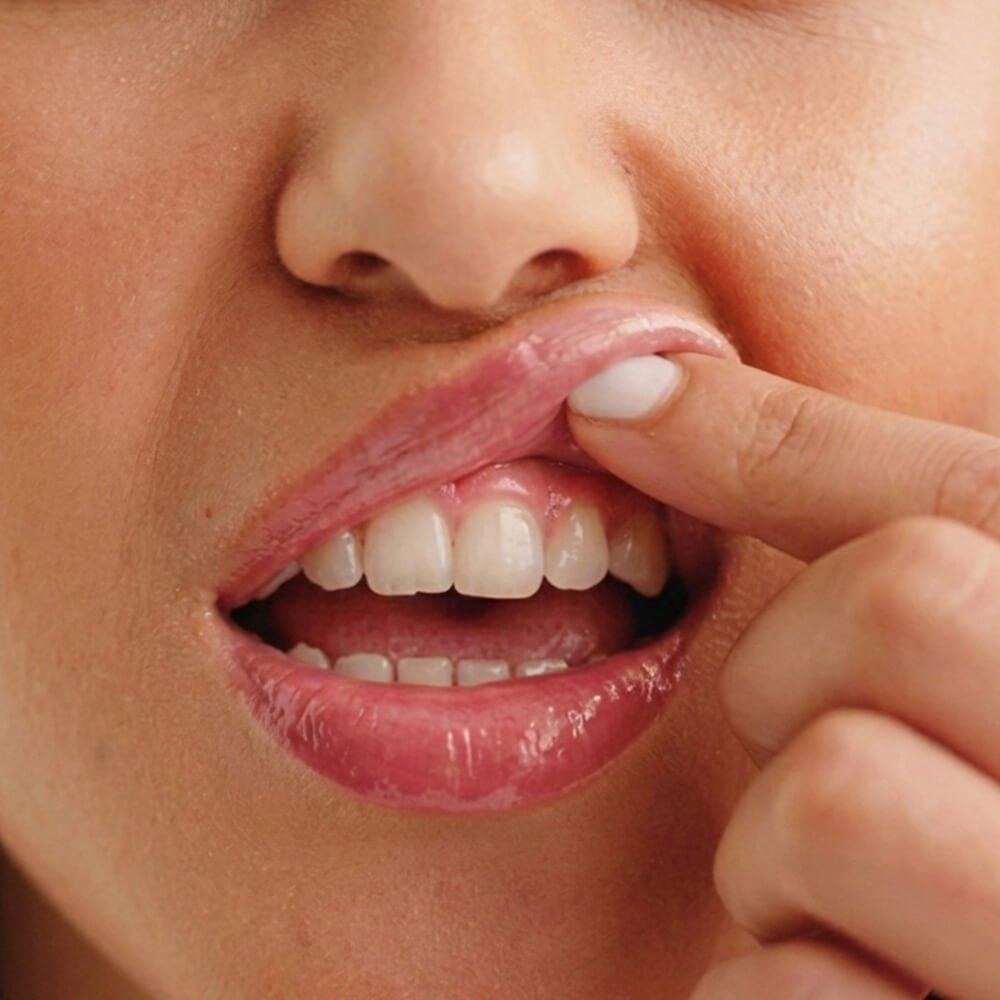
Run your tongue over your teeth right now and notice the difference between tartar vs plaque. Specifically, the back of your bottom front teeth.
Do you feel that fuzzy, sticky coating? Or do you feel a rough, hard patch?
That difference in texture is the difference between a simple daily clean and a $200 dental bill.
Most people use the words "plaque" and "tartar" interchangeably. But they are not the same thing. One is a living biofilm you can wipe away. The other is like cement.
And the scariest part? You only have about 72 hours before the first one turns into the second one.
Tartar vs Plaque: The Sticky Film (It Happens to Everyone)
Think of plaque as a "bacteria party."
It is a colorless, soft film that forms on your teeth every time you eat. The bacteria in your mouth thrive on sugars and starches. They eat, they multiply, and they produce acids.
You cannot avoid it. Even if you don't eat, plaque forms.
How do you spot it?
- The Feel: It feels fuzzy or slimy.
- The Look: It is usually invisible or pale yellow.
- The Removal: It is soft. You can actually scrape it off with a fingernail (gross, but true).
Because it is soft, it is removable. A good brushing session breaks up this colony.
Tartar: The Hard Reality

But here is where things go wrong.
If you leave plaque alone, it changes. Your saliva is full of minerals like calcium. These minerals are great for your enamel, but they do something terrible to plaque. They mineralize it.
Within a few days, that soft sticky film hardens into tartar (also called calculus).
Once it forms, it acts like a coral reef. It is porous and rough. This roughness gives new plaque a perfect place to hide and grow. It creates a vicious cycle that pushes your gums away from your teeth.
How do you spot it?
- The Feel: It feels rough, like stone or concrete.
- The Look: It is yellow or brown. It stains easily from coffee or tea.
- The Removal: You cannot brush it off. It bonds to the tooth enamel like barnacles on a ship.
The 72-Hour Countdown

This is the most important fact you need to know.
Plaque does not harden instantly. You have a window of opportunity.
Research indicates that the mineralization process—turning soft plaque into hard tartar—starts within 24 to 72 hours.
This means your brushing routine is a race against the clock.
If you miss a spot on Monday, by Thursday, that spot might be permanent. No amount of scrubbing will fix it. You will need a dentist with a metal scraper to chip it off.
The Solution: Why "Vibration" Isn't Enough

So, how do you win this race? You need a tool that disrupts the biofilm before it calcifies.
Many people use standard sonic toothbrushes. These are good. They vibrate to create bubbles. But when it comes to sticky, stubborn plaque hiding in the gum line, vibration alone sometimes isn't enough.
You need physical movement. You need Oscillation.
Science backs this up. A significant meta-analysis published on NCBI compared toothbrush technologies directly. The findings were clear: oscillating-rotating brushes showed a real advantage in reducing plaque and gingivitis. They outperformed standard sonic brushes in statistically significant ways.
This is why we engineered the Synhope 60° Oscillating Toothbrush.
It is a hybrid. It gives you the 33,000 vibrations you expect from a sonic brush, but it adds a wide 60-degree sweep.
It doesn't just buzz against the bacteria; it physically sweeps them away. It is like using a broom instead of just shaking the floor. This mechanical action is your best defense during that critical 72-hour window.
Protecting Your Gums (Don't Scrub Hard)
When people feel tartar forming, their instinct is to scrub harder.
Don't do that.
Scrubbing hard with stiff bristles will destroy your enamel and make your gums recede. You need the motion of the brush to do the work, not your hand pressure.
Even top product experts at Business Insider agree on what matters when choosing a toothbrush. Soft bristles and pressure awareness are non-negotiable features for safety.
That is why Synhope uses high-density, soft DuPont bristles. The Auto-Bass technology aims the brush head at the gum line perfectly. You get a deep clean without the damage.
Bottom Line
You cannot stop plaque from forming. But you can stop it from winning.
You have a 3-day window to clear that bacteria before it costs you money at the dentist. Don't rely on luck or manual scrubbing. Upgrade to a tool that is scientifically proven to handle the job.
Protect your 72-hour window with the Synhope 60° Oscillating Toothbrush.
References:
- A Meta-analysis Comparing Toothbrush Technologies on Gingivitis and Plaque. National Center for Biotechnology Information (NCBI). Available at: https://pmc.ncbi.nlm.nih.gov/articles/PMC10829363/
- The best toothbrushes of 2025. Business Insider. Available at: https://www.businessinsider.com/guides/health/best-toothbrush