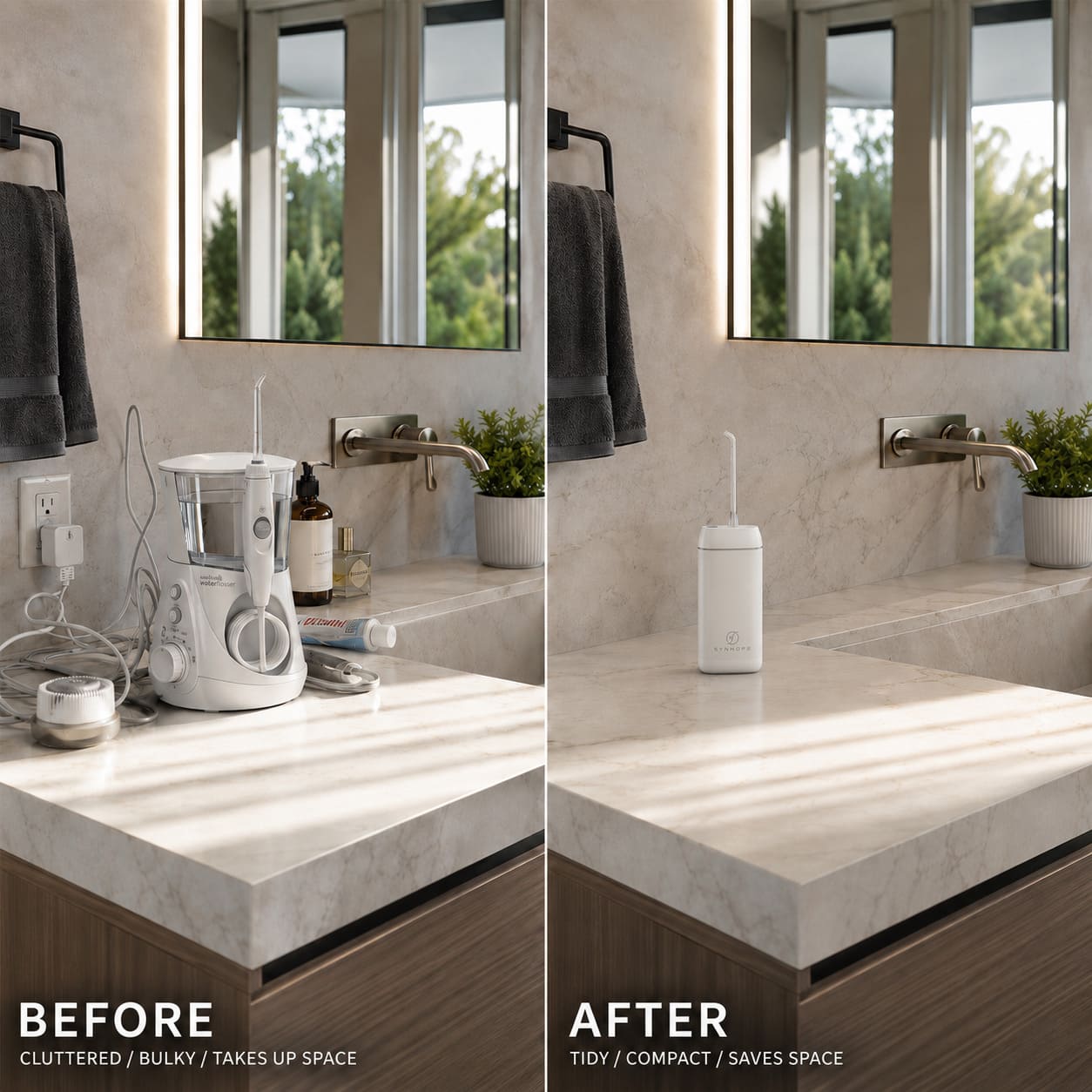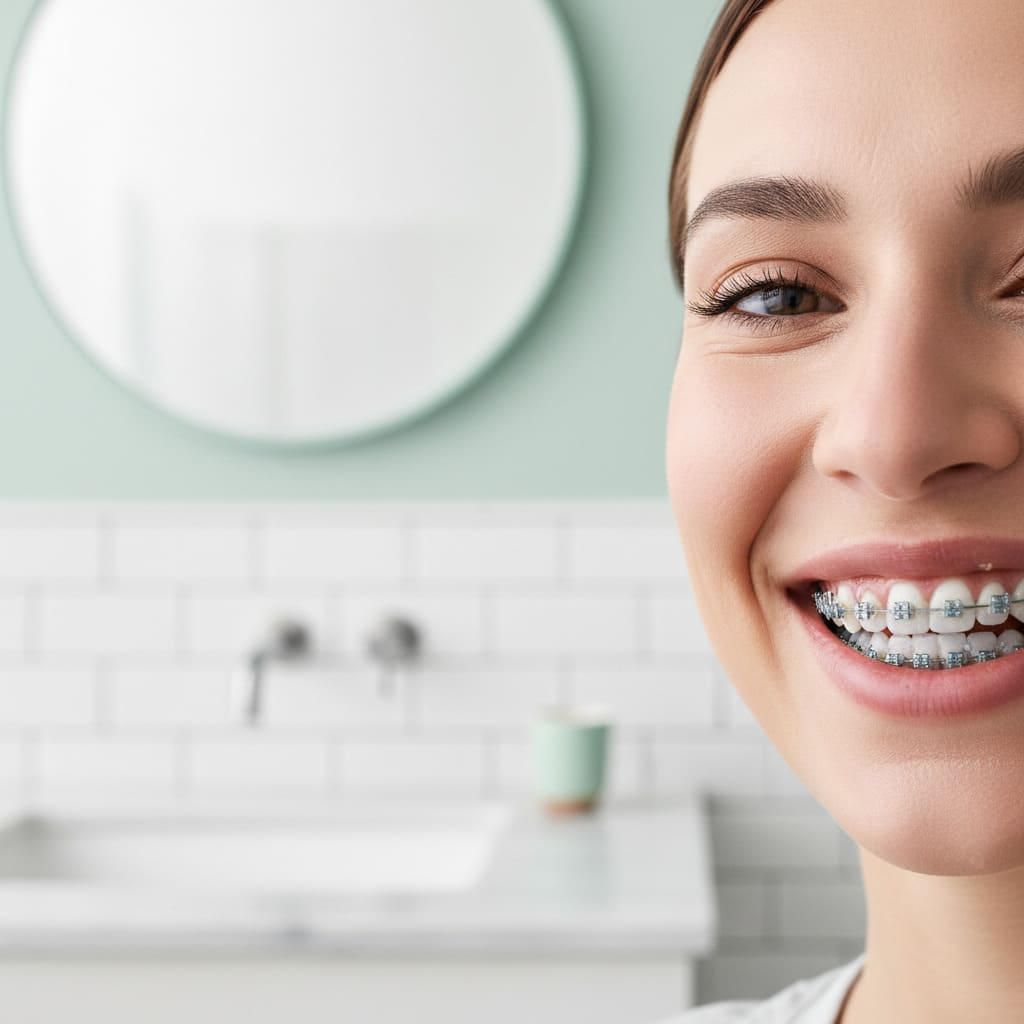
Quick answer: A water flosser can make daily cleaning around braces easier because the pulsing stream reaches around brackets, wires, and spaces that are awkward to clean with string floss. Look for adjustable pressure, an orthodontic tip, a waterproof cordless body, and a tank that fits your routine. Start at the lowest comfortable setting and follow your orthodontist's instructions.
Why Braces Change Your Interdental Cleaning Routine
Fixed braces add brackets, archwires, and elastic components that create more places for food debris and plaque to collect. A toothbrush remains essential, but its bristles cannot clean every surface between teeth or underneath orthodontic wires. The American Dental Association describes cleaning between teeth as an important part of oral hygiene and includes water flossers among the available interdental-cleaning tools. ADA consumer guidance also notes that people with braces or other dental work may find water flossing easier than manual flossing.
That does not mean a water flosser replaces brushing, professional cleanings, or personalized orthodontic advice. The most useful tool is one you can operate correctly and consistently without causing pain. Some people combine water flossing with floss threaders or interdental brushes, while others use one method based on their orthodontist's recommendation. Persistent bleeding, swelling, pain, or loose dental hardware should be evaluated by a dental professional rather than managed by increasing water pressure.
What to Look for in a Water Flosser for Braces
| Buying Criterion | Why It Matters for Braces | What to Check |
|---|---|---|
| Adjustable pressure | Comfort can change after orthodontic adjustments | Several clearly labeled pressure or cleaning modes |
| Orthodontic tip | A specialized tip can help direct water around brackets and wires | Included in the box rather than sold only as an add-on |
| Cordless design | Easier to use in small bathrooms, at school, or while traveling | Battery life, charging type, and storage size |
| Waterproof rating | Simplifies rinsing and shower use | Look for a stated rating such as IPX7 |
| Tank capacity | Determines whether a refill may be needed during a session | Balance capacity against portability |
| Replacement tips | Tips wear and may accumulate mineral deposits | Availability, compatibility, and replacement guidance |
A maximum-pressure number should not be the only buying criterion. For braces, control and technique are more important than automatically choosing the strongest stream. A useful device should let you begin gently, move around each bracket systematically, and reach the back molars without an awkward grip. Travel users should also check whether the tank collapses, whether the charger uses a common connection, and whether replacement tips can be stored without damage.
How Much Pressure Should You Use With Braces
1. Start With the Lowest Comfortable Setting
There is no single PSI setting that is correct for every person with braces. Gum sensitivity, recent adjustments, dental history, and the shape of the nozzle all affect comfort. Place the tip in your mouth before switching the unit on, lean over the sink, and begin on the lowest setting. Direct the stream along the gumline and around each bracket rather than holding it against one spot. If the pressure feels sharp or painful, reduce it and review the technique.
2. Higher Pressure Is Not Automatically Better
A higher maximum pressure gives experienced users more adjustment range, but it should not be treated as a target. The SYNHOPE M6P, for example, has an adjustable 40–140 PSI range; that specification describes the device, not a universal clinical recommendation. Tender gums after a tightening appointment may require a gentler mode. Stop using the device and consult a dental professional if bleeding is heavy, continues, or is accompanied by pain, swelling, or other symptoms.
SYNHOPE M6P vs ML16 for Braces
| Feature | SYNHOPE M6P | SYNHOPE ML16 |
|---|---|---|
| Best fit | Compact travel and everyday braces cleaning | More mode choices and longer battery interval |
| Cleaning modes | Soft, Pulse, Strong | Six modes including Braces Care |
| Pressure information | Adjustable 40–140 PSI | Multiple cleaning modes |
| Battery life | Up to 30 days | Up to 40 days |
| Waterproof rating | IPX7 | IPX7 |
| Travel design | Telescopic 140 ml tank | Cordless ergonomic body |
| Orthodontic tip | Included | Included |
The SYNHOPE M6P portable cordless water flosser is the stronger choice when packing space is the main concern. Its telescopic tank collapses into the body, it charges through USB Type-C, and it includes an orthodontic tip. The SYNHOPE ML16 cordless water flosser is better suited to users who value six cleaning modes and up to 40 days between charges. Both models should be used at a comfortable setting and as part of a complete routine that includes brushing.

How to Use a Water Flosser With Braces
- Fill the tank with lukewarm water. Very cold water may feel uncomfortable if your teeth are sensitive.
- Attach the orthodontic tip. Check that it is seated correctly and can rotate as designed.
- Select the gentlest setting. Increase only when the stream remains comfortable.
- Lean over the sink. Put the tip in your mouth before turning the unit on.
- Follow the gumline. Move slowly from tooth to tooth and pause briefly around each bracket.
- Clean above and below the wire. Approach the hardware from more than one angle without pressing the tip against it.
- Rinse the tank and tip. Empty remaining water and allow the components to dry.
- Brush thoroughly. Water flossing complements rather than replaces twice-daily brushing.
A complete session should be systematic rather than forceful. Work through the mouth in the same order each time so no area is skipped. If your orthodontist has provided a different sequence, pressure limit, or special instruction, follow that advice. Do not add bleach, peroxide, essential oils, or other unapproved liquids to the tank. Check the product manual before using mouthwash because some formulations can affect internal components.
What the Research Says
Research on water flossing during orthodontic treatment is useful but not uniform. One randomized trial involving orthodontic patients found that both super floss and a water flosser reduced plaque immediately after cleaning, with no significant overall difference between the two methods. A separate randomized clinical trial also found that both water-jet flossing and interdental flossing improved plaque and bleeding measures over two weeks, without a statistically significant difference between groups. These findings support water flossers as a practical interdental option, but they do not prove that every device is superior to string floss or interdental brushes.
You can review the randomized trial comparing super floss and water flossing for study details and limitations. Product design, user technique, adherence, and individual dental conditions all affect results. This article provides general educational information and is not a substitute for diagnosis or treatment from a dentist or orthodontist.
Frequently Asked Questions
1. Can You Use a Water Flosser With Braces Every Day?
Many people use an interdental cleaner daily, and ADA guidance recommends cleaning between the teeth once a day. Your orthodontist may suggest a different routine based on your appliance and gum health.
2. Does a Water Flosser Replace Brushing?
No. A water flosser helps clean between teeth and around brackets, while a toothbrush cleans the accessible tooth surfaces and gumline. Continue brushing twice daily with fluoride toothpaste unless your dental professional advises otherwise.
3. Is 140 PSI Safe for Braces?
140 PSI is the maximum specification of some adjustable devices, including the M6P, not a universal setting recommendation. Begin at the lowest comfortable mode and increase only when appropriate. Ask your orthodontist if you are unsure.
4. What Should You Do if Your Gums Bleed?
Mild bleeding can have several causes, including inflammation or changes in cleaning technique. Reduce the pressure and avoid forcing the stream against one area. Persistent, heavy, or painful bleeding should be evaluated by a dental professional.
5. Can You Travel With a Cordless Water Flosser?
Cordless models are designed for portable use, but airline battery and carry-on rules can change. Check the current requirements for your airline and route before departure, empty the tank, and pack the unit so it cannot switch on accidentally.