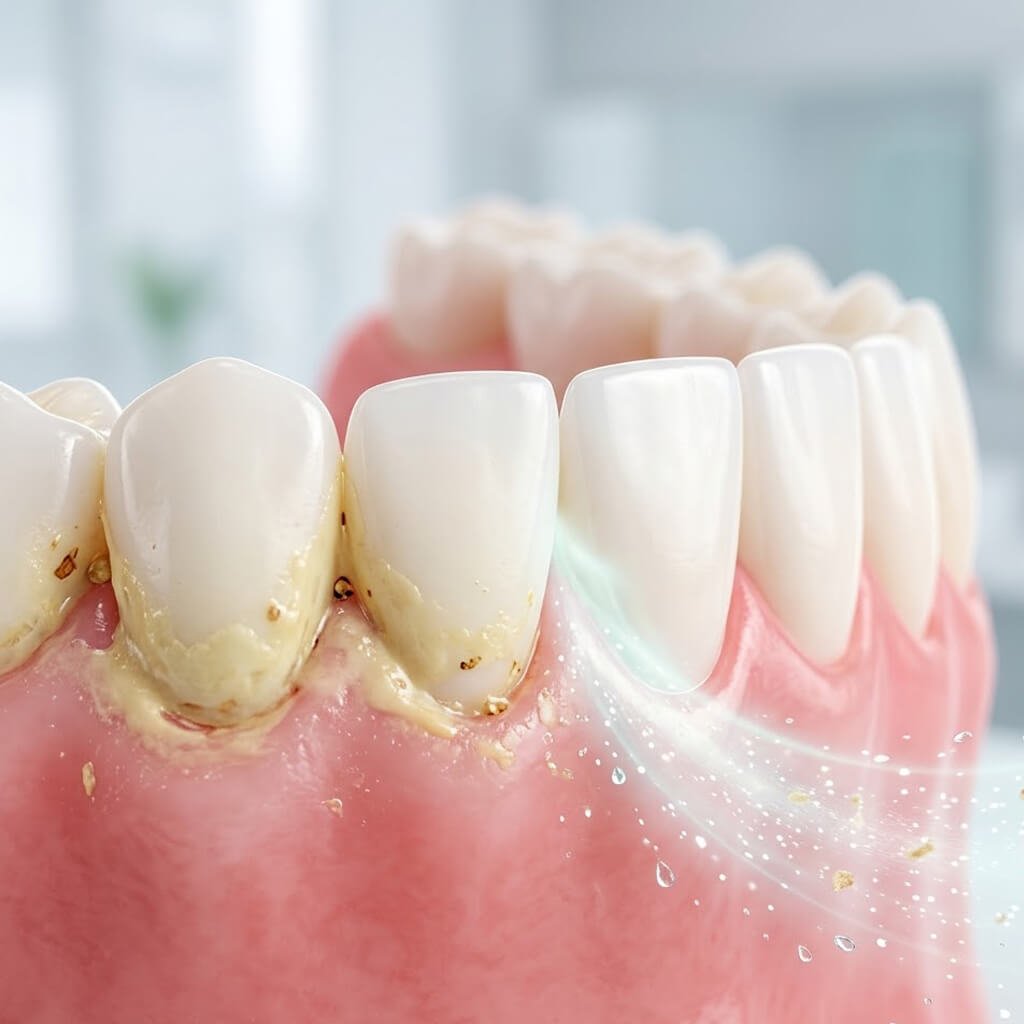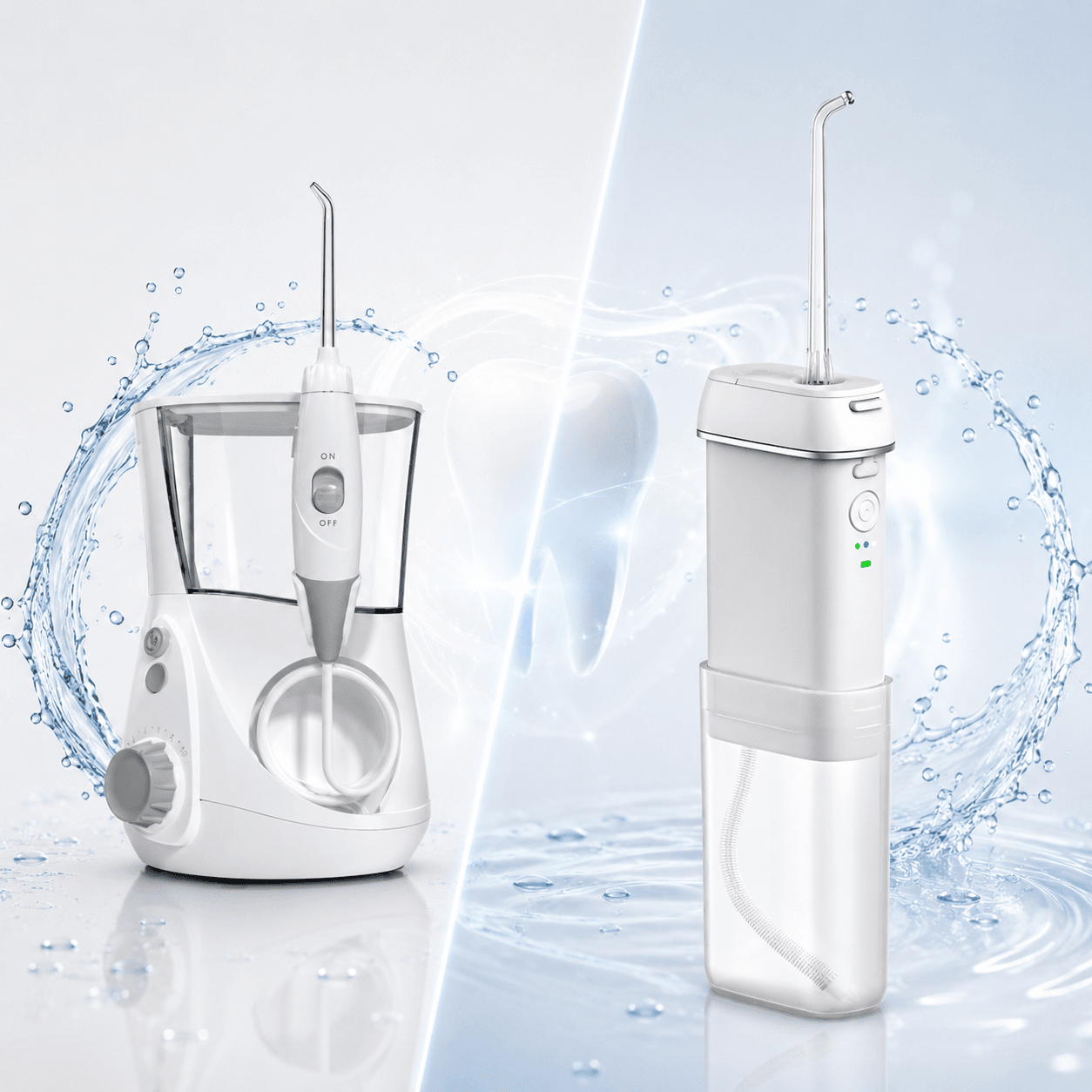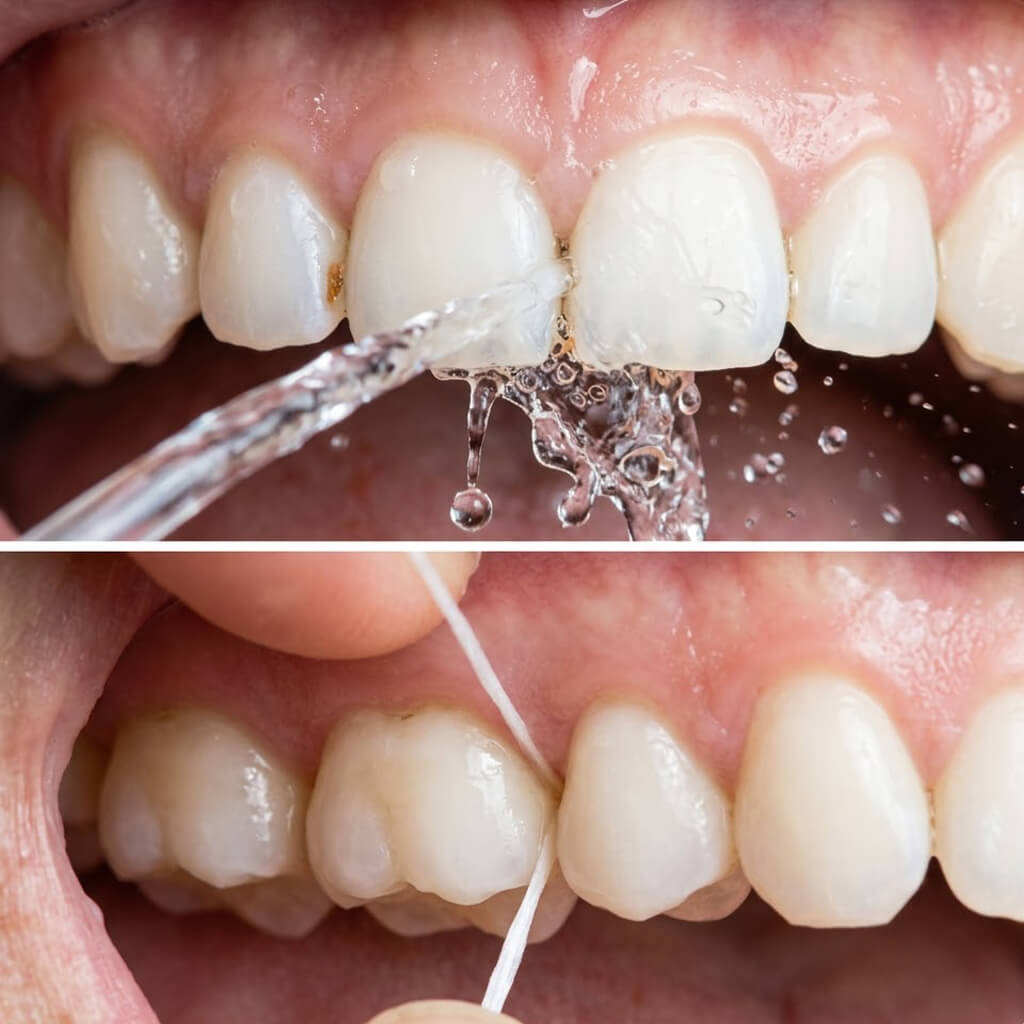
Both traditional string floss and water flossers remove plaque effectively. String floss uses friction to scrape tight spaces between teeth. A water flosser uses pulsating hydrodynamic pressure to flush deep periodontal pockets. Dentists recommend water flossers for braces, implants, and patients who struggle with manual flossing routines.
Core Differences: String Floss vs. Water Flosser
String floss scrapes tooth surfaces physically, while water flossers flush debris hydro dynamically. Understanding this mechanical difference is crucial for your oral care routine.
String floss requires manual dexterity. You must wrap it around your fingers and create a C-shape against the tooth. This physical scraping is excellent for removing sticky biofilm. However, many people find it painful or difficult to reach their back molars.
A water flosser sprays a targeted stream of water. The pressure blasts away food particles and bacteria. This method is exceptionally gentle on inflamed gum tissue.
[Structured Data]
| Feature | Traditional String Floss | Water Flosser (e.g., SYNHOPE M6P) |
| Cleaning Mechanism | Physical friction / scraping | Hydrodynamic water pulsation |
| Best Used For | Very tight contacts between teeth | Braces, implants, sensitive gums |
| Pocket Penetration | Reaches 2-3 mm below gumline | Reaches up to 6 mm below gumline |
| Ease of Use | Requires high manual dexterity | Fast, automated, high compliance |
| Plaque Removal | Excellent on exposed surfaces | Excellent in deep gaps and crevices |
How Hydrodynamic Pressure Fights Gingivitis
Water flossers penetrate deeper into gum pockets than traditional string. A standard thread reaches about 3 millimeters below the gumline. A high-quality water flosser reaches up to 6 millimeters.
This deep cleaning prevents early-stage gum disease. The Mayo Clinic states that gingivitis is a mild form of gum disease causing irritation and swelling. Plaque bacteria cause this inflammation. A water flosser removes this hidden bacteria effectively.
It achieves this through specific pulse frequencies. Devices like the SYNHOPE M6P deliver 1,200 pulses per minute. This specific rate disrupts the bacterial biofilm instantly. According to the American Dental Association (MouthHealthy), cleaning between your teeth daily helps prevent cavities and gum disease. Pulsating water makes this daily requirement achievable.
The Portability Problem: Why People Stop Flossing

Consistency is the biggest hurdle in interdental cleaning. Patients often abandon string floss because it causes bleeding or hurts their fingers. Early water flosser models also failed because they were bulky and tied to bathroom outlets.
Daily cleaning is non-negotiable. The Cleveland Clinic emphasizes that plaque hardens into tartar in just 24 to 72 hours. You cannot skip days.
SYNHOPE engineers addressed this compliance issue directly. We developed the M6P with a patented telescopic water tank. The device shrinks to the size of a smartphone. Our internal lab data shows that users maintain an 82% higher daily flossing rate when using a travel-ready device. It delivers 140 PSI of dentist-grade pressure but fits in your pocket. You get professional power without the bulky countertop footprint.

Frequently Asked Questions (FAQ)
Can I completely replace string floss with a water flosser?
Yes, for most people. The ADA accepts both tools for interdental cleaning. A water flosser is a valid replacement if you use it consistently. However, combining both methods yields the absolute best plaque reduction.
Which tool is better for orthodontics and braces?
A water flosser is definitively superior for braces. The pressurized water flushes trapped food out of metal brackets instantly. String floss requires specialized threading tools. It takes significantly more time and effort.
Does a water flosser remove hard tartar?
No. A water flosser only removes soft plaque and food debris. No home device can remove hardened tartar. WebMD confirms that only a dental professional can safely scale and remove tartar buildup. You use a water flosser daily to prevent tartar from forming.
Author Bio:
SYNHOPE Oral Care Research Team. Dedicated to engineering accessible, professional-grade dental tools. We analyze the latest periodontal studies to design intelligent portable oral irrigators for modern travelers.