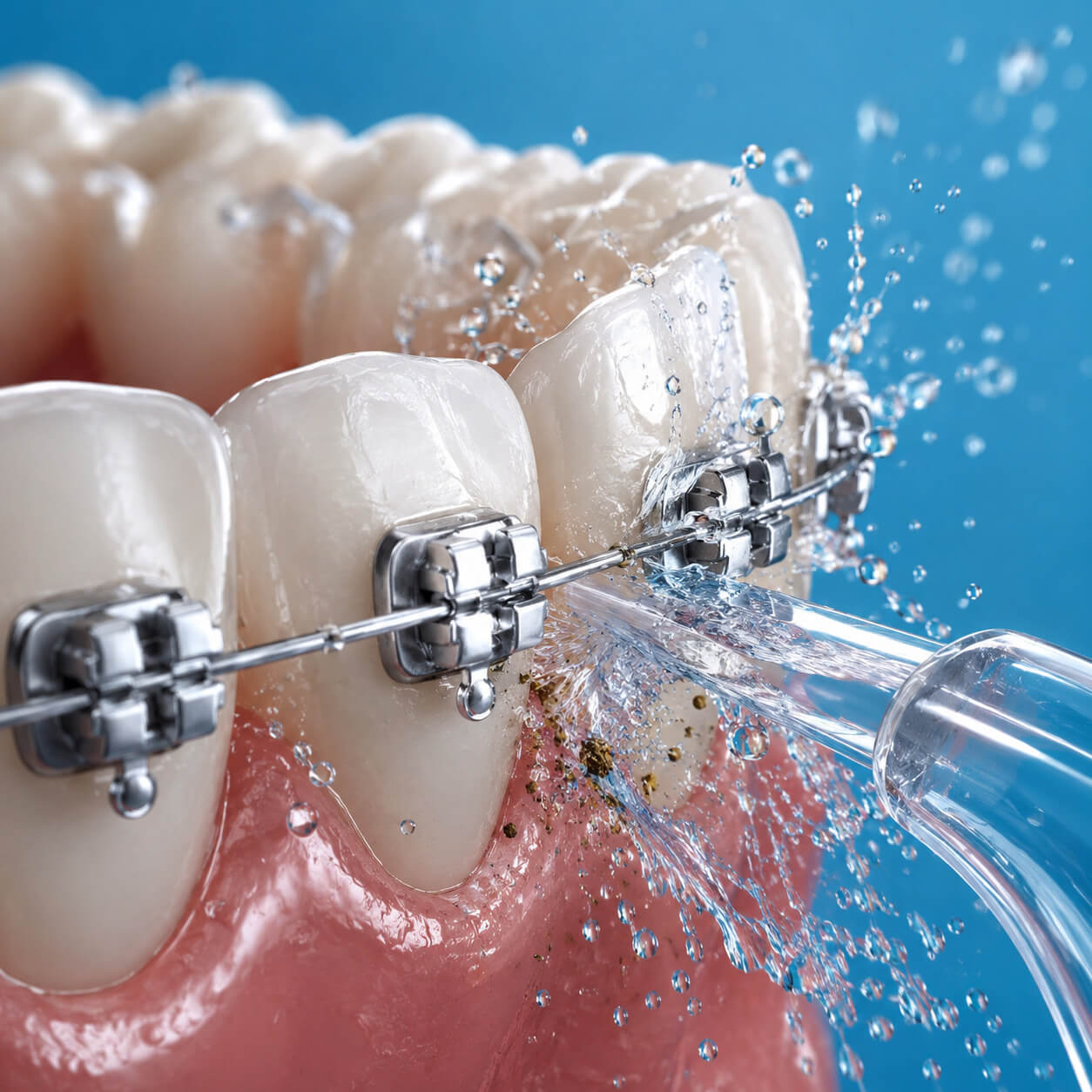
The Short Answer: Clean braces at school or work effectively. Assemble a compact orthodontic kit. Include wax, a travel toothbrush, and a cordless water flosser. Rinsing immediately after lunch flushes out trapped food. This happens from brackets and wires in under 60 seconds. It prevents bad breath and enamel decalcification. Avoid embarrassing food impactions during classes or meetings.
The Midday Orthodontic Challenge
1. The Reality of Eating with Braces

Eating lunch at the office is stressful for orthodontic patients. School cafeterias are also difficult for them. Cleveland Clinic specialists note traditional braces use complex systems. These bracket, band, and wire systems attract food particles. A simple sandwich or salad can leave visible remnants. Food gets tangled in your dental hardware. This leads to social embarrassment. Rapid bacterial colonization occurs later in the day.
2. The Danger of Delaying Oral Hygiene
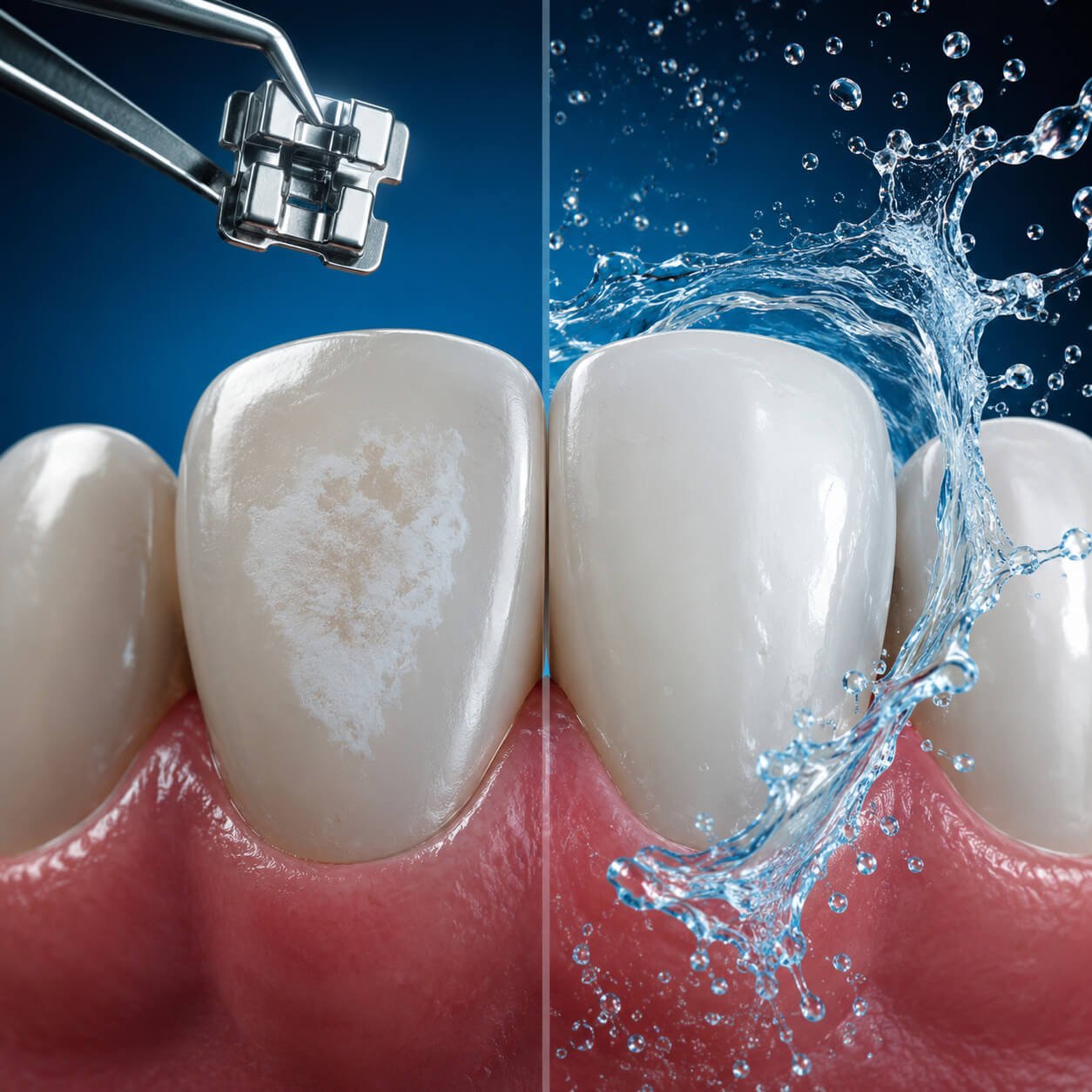
Waiting until 6 PM to clean teeth is a destructive habit. The American Dental Association (ADA) via MouthHealthy stresses plaque forms quickly. Oral hygiene must be meticulously maintained. This prevents trapped food turning into harmful acids. Allowing sugary or starchy food to sit accelerates acid attacks. Prolonged acidic exposure causes permanent white spot lesions. Many patients also get swollen, bleeding gums. This happens after their braces are removed.
Optimizing Your Travel Orthodontic Kit to Clean Braces at School

1. Traditional vs Modern Cleaning Tools
Maintain strict hygiene away from home. You must carry the right tools. However, lugging a bulky oral care bag is inconvenient. This discourages teenagers and professionals. They may not clean their teeth at all.
Upgrading your kit with modern technology drastically reduces the time and effort required to clean your hardware in public spaces. Here is how traditional travel methods compare to modern portable solutions:
| Tool Category | Traditional Travel Method | Modern Portable Solution |
| Interdental Cleaning | Floss threaders (Takes 10+ mins, requires a mirror) | Telescopic Water Flosser (Cleans all brackets in 60 seconds) |
| Plaque Disruption | Manual folding toothbrush (Requires aggressive brushing) | Sonic travel toothbrush (Breaks down plaque gently) |
| Discretion in Public | High effort, messy, keeps you at the sink for a long time | Fast, neat, gets you in and out of the restroom quickly |
| Storage Footprint | Multiple separate boxes and string containers | All-in-one pocket-sized devices |
The Best Water Flosser for Braces on the Go

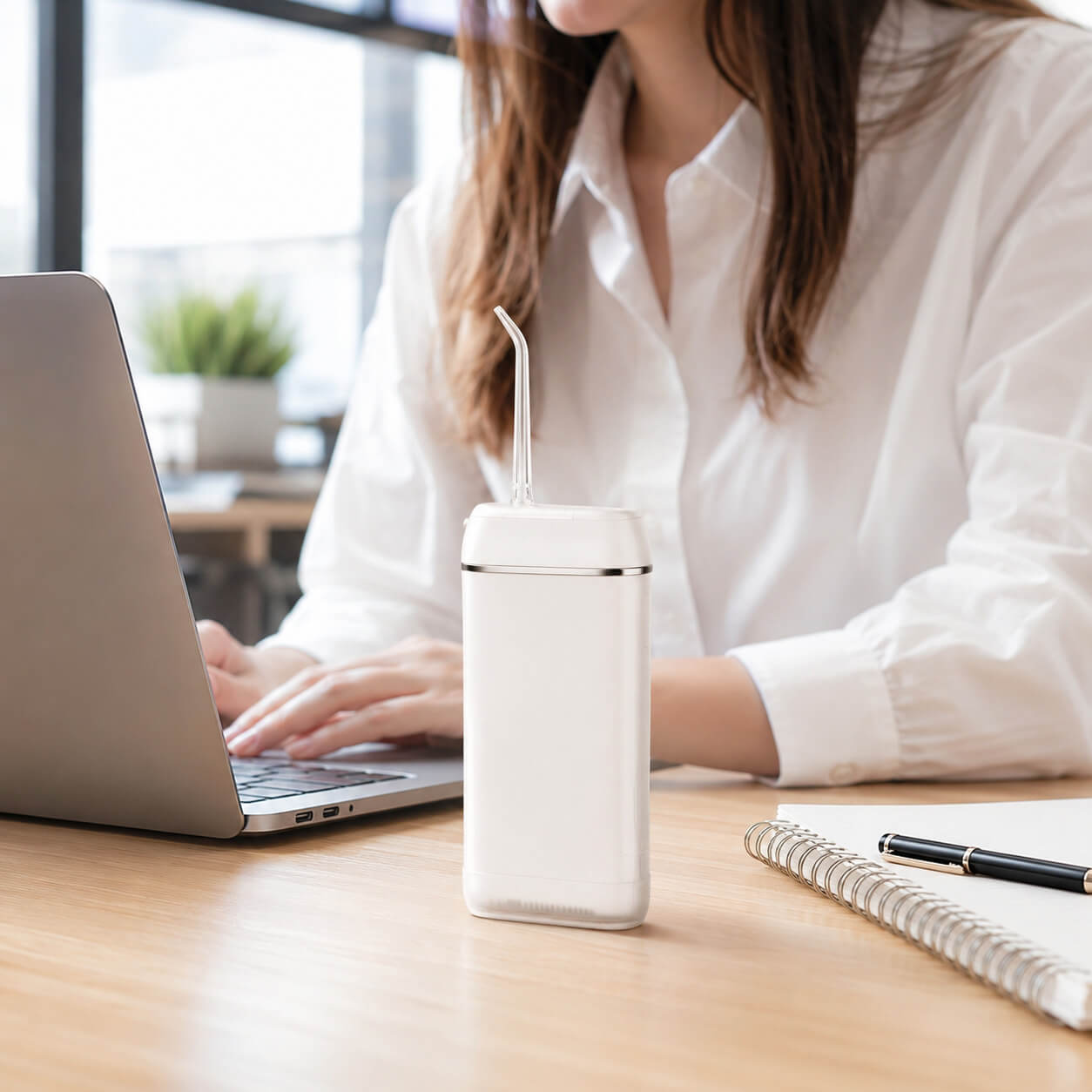
For students and busy professionals, this is important. The SYNHOPE M6P Portable Cordless Water Flosser is ideal. It is the ultimate midday orthodontic companion. Traditional travel irrigators are bulky with weak motors. The SYNHOPE M6P has a patented telescopic water tank. It collapses to the size of a smartphone. It easily slides into a backpack pocket. It also fits a locker or small office purse.
Despite its extreme portability, it delivers a strong stream. It offers a clinical-grade 140 PSI hydrodynamic stream. This precise pressure blasts away sticky food. It removes bread, meat fibers, or spinach. Food caught behind archwires is removed without damage. Its upgraded leak-proof design is a plus. The ultra-quiet motor ensures discreet cleaning. Maintain hygiene in an office or school restroom. Avoid unwanted attention or making a mess.
(Prices may vary due to promotions. Please check the official website for the latest pricing.)
Frequently Asked Questions
1. How long does it take to clean braces after lunch?
Using manual floss threaders can take over 10 minutes. A thorough cleaning is time-consuming. However, a high-pressure water flosser and brush help. You can flush out all food debris quickly. Freshen your breath in under 2 minutes. Get back to class or your desk fast.
2. Can I use interdental brushes instead of a water flosser?
Interdental brushes are excellent for large food pieces. They push food from between wires. But they do not flush away microscopic sticky plaque biofilm. Plaque coats the brackets. A water flosser uses hydrodynamic force. It washes away both large debris and invisible plaque. This provides a more comprehensive clean.
3. Is it messy to use a water flosser in a public restroom?
It takes practice to avoid splashing. The key to clean water flossing is leaning low. Lean over the sink in a public restroom. Keep your lips slightly closed around the nozzle. This contains the spray. Let water passively drop from your mouth into the drain.