The Short Answer: Prevent white spot lesions after braces removal. Stop enamel decalcification during orthodontic treatment. This causes white spot lesions. Meticulously remove plaque biofilm from around your brackets daily. Use a high-pressure water flosser to flush out hidden bacteria. Combine this with daily fluoride remineralization therapy. This prevents acidic attacks that permanently scar your tooth enamel.
Understanding the Pathology of White Spot Lesions
1. The Demineralization Process
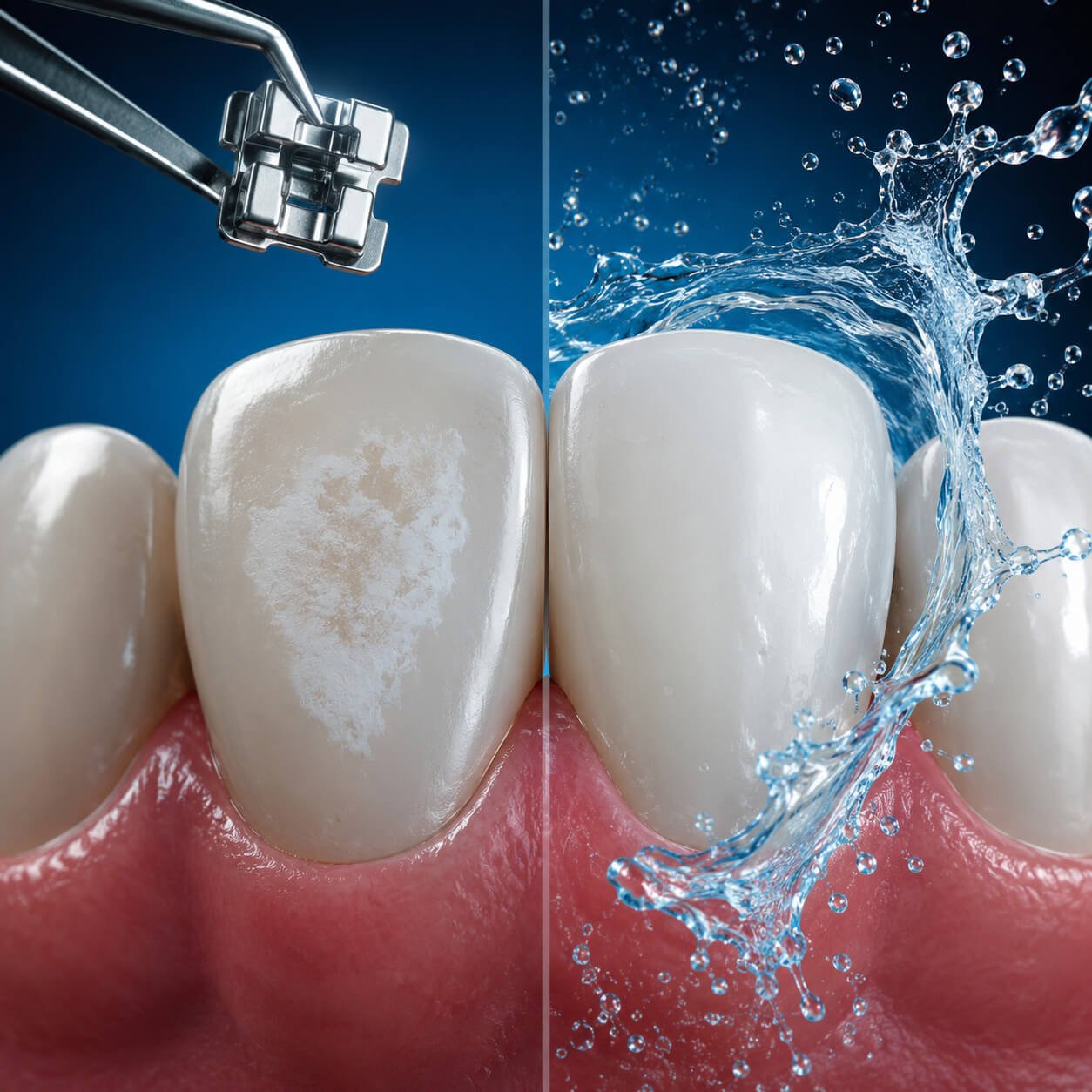
Many patients are thrilled to get their braces removed. Then, they are horrified by chalky white squares on their teeth. These marks are not stains. They are clinical white spot lesions (WSLs).
A clinical review by the National Institutes of Health (NIH) defines these lesions. They are the earliest visible stage of tooth decay. They occur when oral bacteria feed on trapped carbohydrates. This process produces lactic acid. This acid leaches critical minerals from your tooth enamel. It removes calcium and phosphate. As enamel loses density, it becomes porous. Its optical refractive index changes. It appears as an opaque, chalky white scar.
2. Why Orthodontic Brackets Accelerate Decay
Anyone can develop decalcification. Orthodontic patients, however, are at severe risk. Medical columns from Healthline confirm this. White spots on teeth are often caused by bacterial plaque. Plaque overgrowth is a direct side effect of wearing braces.
Brackets, archwires, and elastic ligatures create a complex environment. This is on the tooth surface. These hardware components retain sticky plaque biofilm. If plaque is not mechanically disrupted, acid production spikes. This happens within 24 hours. This rapidly decalcifies vulnerable enamel. It affects the area under and around metal brackets.

Clinical Methods to Protect Your Enamel
1. Upgrading to Hydrodynamic Plaque Disruption
To prevent acid attacks, you must completely remove the bacterial plaque. However, manual brushing and string flossing are often inadequate for patients with braces. The American Dental Association (ADA) explicitly notes that cleaning around orthodontic appliances requires specialized tools and extra time.
Traditional floss cannot easily clean bracket borders. Therefore, upgrading to a hydrodynamic water flosser is critical. The pressurized liquid stream creates a shear force. It safely penetrates under the archwires. It flushes microscopic gaps where the bracket meets enamel. This neutralizes acidic biofilm before permanent damage occurs.
2. The Role of Fluoride Remineralization
Removing plaque stops the acid attack. You also need to repair microscopic enamel damage. Use a high-quality fluoride toothpaste daily. A dedicated fluoride mouthwash also helps. It pushes calcium and phosphate back into porous enamel. This re-hardens the tooth surface. It prevents early demineralization. This stops it from becoming a visible white spot.
Comparing Orthodontic Cleaning Efficacy
To understand why traditional methods often result in white spot lesions, compare the physical mechanics of common interdental tools:
| Cleaning Tool | Plaque Disruption Mechanism | Orthodontic Reach | Risk of Leaving Plaque |
| Traditional String Floss | Physical scraping | Poor (Blocked by brackets and wires) | High (Misses bracket perimeters) |
| Interdental Proxy Brushes | Physical brushing | Moderate (Good for large wire gaps) | Medium (Fails to clean micro-crevices) |
| High-Pressure Water Flosser | Hydrodynamic shear force | Excellent (Fluid conforms to all hardware) | Low (Flushes 99.9% of loose biofilm) |

The Ultimate Defense Against White Spot Lesions and Enamel Decalcification
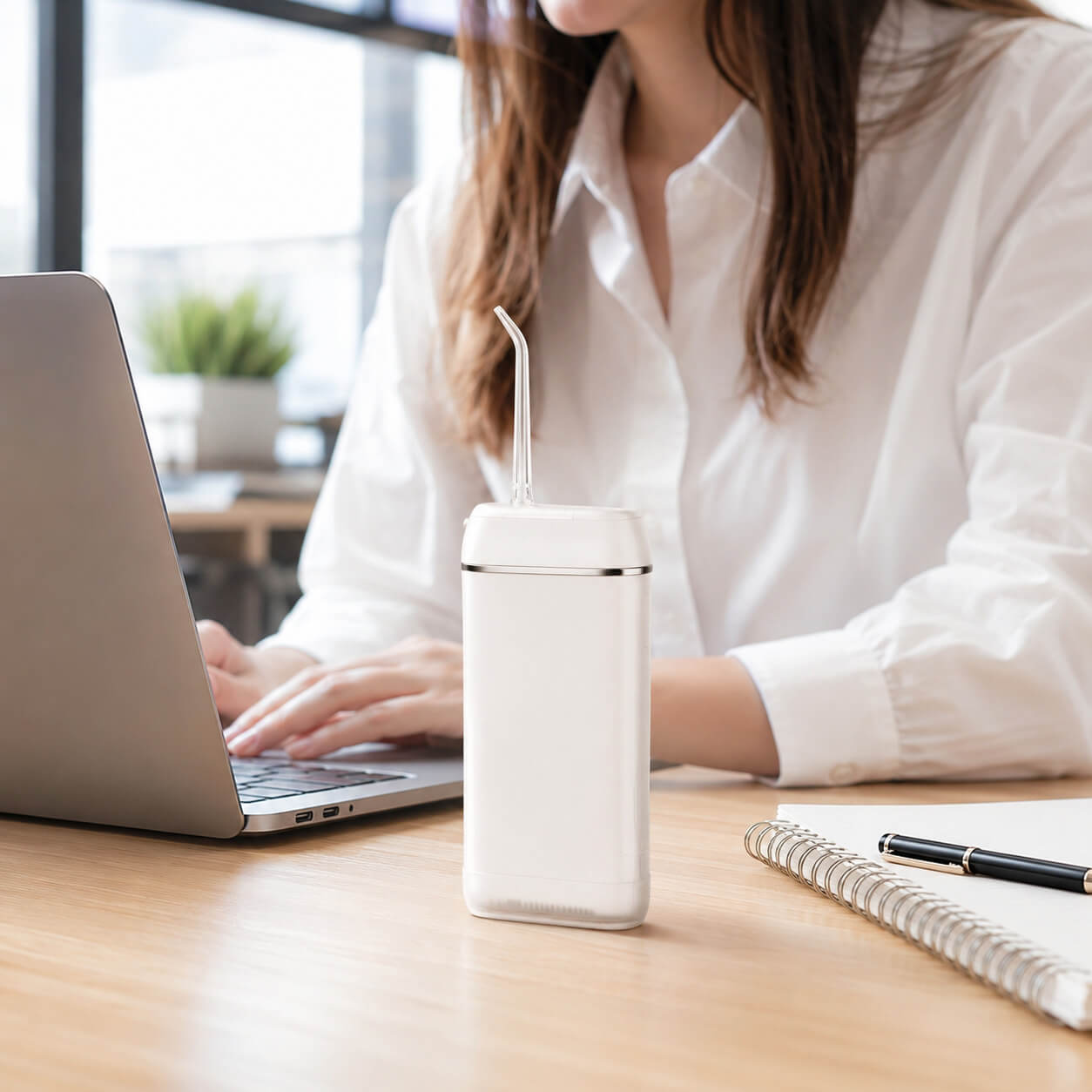
White spot lesions are irreversible without expensive cosmetic dentistry. Prevention is your only true defense against them. To keep your enamel pristine underneath your hardware, use the SYNHOPE M6P Portable Cordless Water Flosser. It provides exact clinical specifications for advanced orthodontic hygiene.
Weak travel irrigators leave sticky plaque intact. The SYNHOPE M6P is different. It uses an upgraded internal motor. This delivers a dynamic pressure range of 40 to 140 PSI. It also provides 1,200 pulsations per minute. This specific hydrodynamic force is powerful. It blasts away dense bacterial biofilm. This biofilm clings to bracket edges. This effectively halts the decalcification process.
The device has three cleaning modes. These are Soft, Pulse, and Strong. This helps patients with post-adjustment soreness. You can maintain a strict cleaning schedule. It won't irritate tender gums. Its patented telescopic water tank collapses. It becomes the exact size of a smartphone. This discreet portability ensures defense for your enamel. Aggressively fight acid attacks after lunch. Clean at school, the office, or while traveling. Guarantee a flawless smile when braces come off.
(Prices may vary due to promotions. Please check the official website for the latest pricing.)

Frequently Asked Questions
1. Can white spot lesions go away on their own?
No, once enamel is severely demineralized, it won't heal. It will not polish away. Aggressive remineralization therapies can slightly improve appearance. These are supervised by a dentist. However, the structural damage is permanent. Preventative hydrodynamic cleaning is mandatory during braces treatment.
2. Does a water flosser remove existing white spots?
No, a water flosser is a preventative tool. It is not for cosmetic treatment. It removes plaque biofilm. This biofilm causes decalcification. If you have white spot lesions, use a water flosser. It will stop them from deteriorating further. This prevents full dental cavities. But it will not erase existing opaque scars.
3. How often should I clean my brackets to prevent decalcification?
To completely prevent the acidic demineralization cycle, you must flush your orthodontic hardware after every major meal. Plaque bacteria begin producing enamel-eating lactic acid within 20 minutes of consuming carbohydrates. Using a portable water flosser immediately after lunch drastically reduces your localized acid exposure.