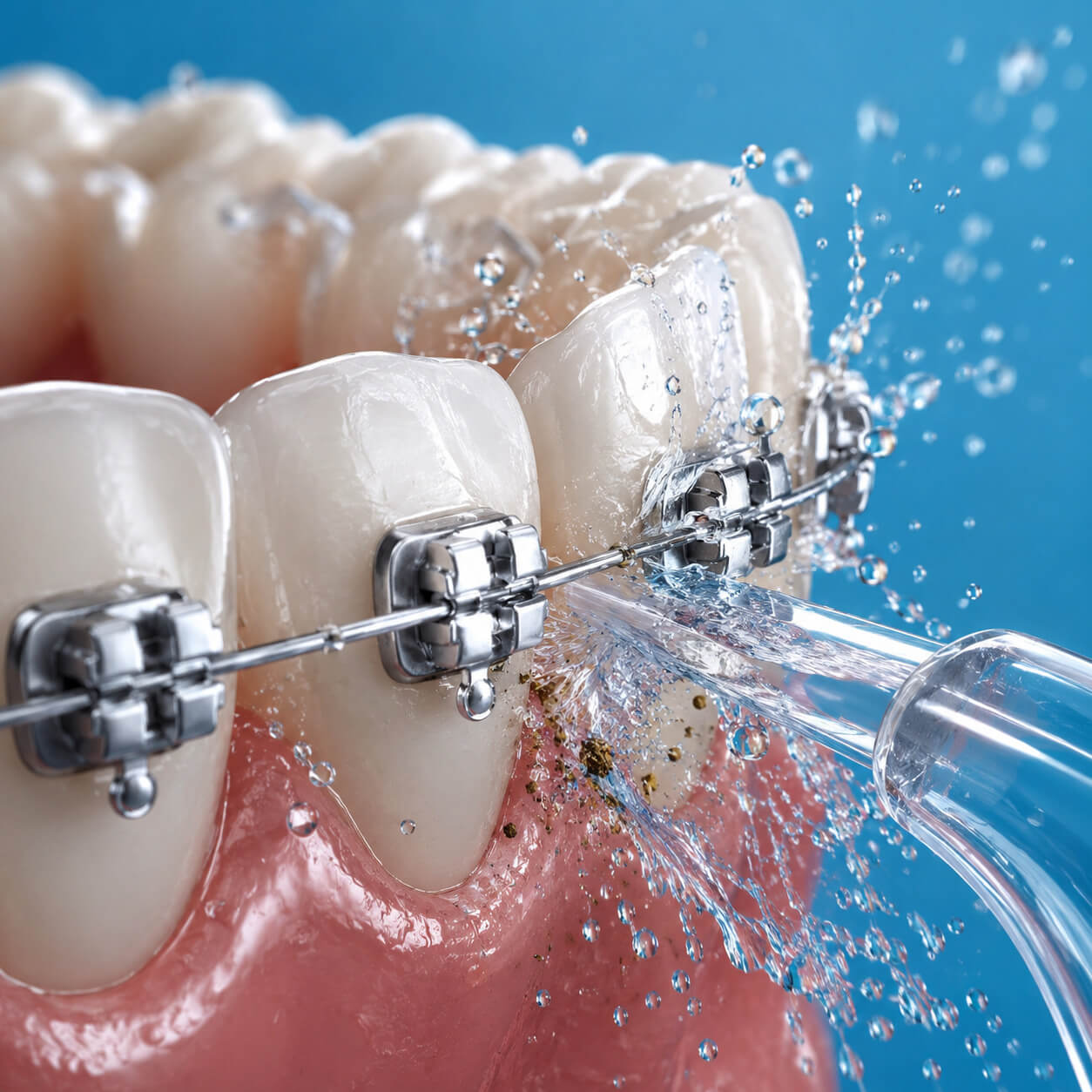
To clean around orthodontic brackets, a water flosser needs specific features. It must deliver a dynamic water flosser PSI. This range is between 40 to 140 PSI. It also needs at least 1,200 pulsations per minute. Lower pressures fail to dislodge sticky plaque biofilm. They cannot clean tight hardware gaps. Excessive unadjustable pressure can irritate tender gums. This happens when gums adjust to new braces.
The Orthodontic Cleaning Crisis

1. The Hazard of Plaque Accumulation Around Brackets
When you get braces, your oral hygiene complexity triples. The brackets, archwires, and ligatures create thousands of microscopic structural blind spots where food particles and dental plaque immediately accumulate.
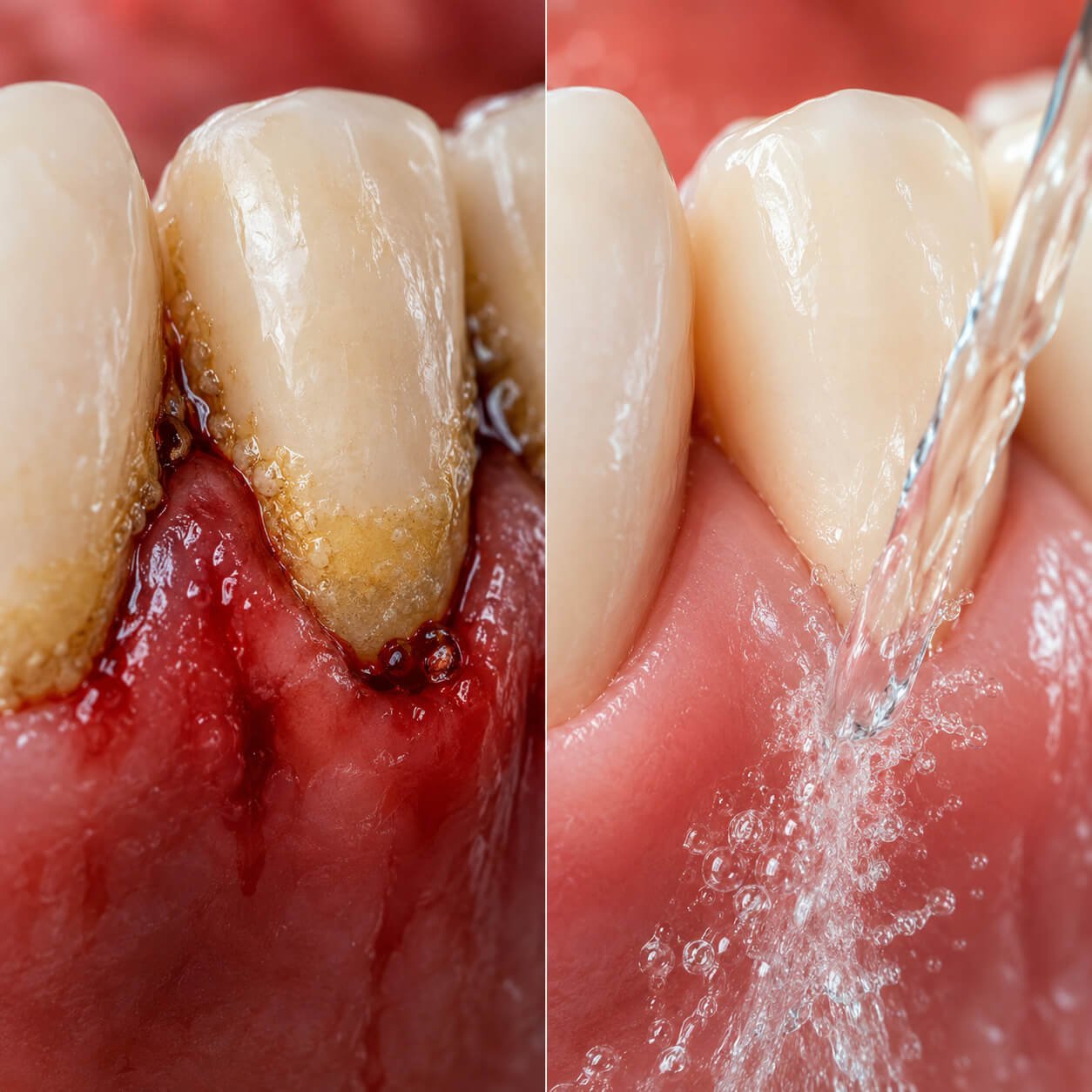
Specialists at Brite Orthodontics note plaque buildup. This occurs at orthodontic hardware junctions. It causes rapid enamel demineralization. This often manifests as permanent white spot lesions. These appear around brackets once removed. Worse, accelerated tooth decay can happen. Chronic gingivitis may occur during treatment.
2. Why Manual Flossing Fails Orthodontic Patients
Traditional string floss is inefficient for braces wearers. Threading under an archwire is exhausting. It takes over 10 minutes per tooth gap.
Many patients skip flossing due to tedium. The Cleveland Clinic notes this issue. Braces trap debris easily. Strict oral hygiene is critical. It prevents swollen gums and cavities. String floss can be difficult to maneuver. Anaerobic bacteria then colonize deep subgingival areas. Toothbrushes cannot reach these spots.
Demystifying Water Flosser Pressure PSI for Braces

1. What is PSI and Why Does It Matter
PSI stands for Pounds per Square Inch. It measures mechanical pressure. This is from the compressed water stream. For orthodontic care, PSI is a key metric. It determines if an irrigator can dislodge plaque. It does so without damaging dental work.
Medical experts highlight water flossing benefits. Medical News Today notes its advantages for braces. Pulsating water streams massage gums safely. Fluid pressure pushes food and plaque away. It works on teeth and brackets. No abrasive physical scraping is needed.
2. The Golden PSI Range for Orthodontic Care
Many brands advertise extreme, static PSI numbers. They want to appear powerful. However, fixed high pressure is dangerous for braces. Your mouth's needs change over your orthodontic timeline.
| Cleaning Phase | Required Pressure | Clinical Outcome for Braces |
| Post-Adjustment (Tender Gums) | 40 - 60 PSI (Low/Soft) | Soothes throbbing tissues while gently flushing soft debris around new wires. |
| Daily Deep Maintenance | 70 - 110 PSI (Medium/Pulse) | Disrupts sticky plaque biofilm and flushes food trapped under archwires. |
| Heavy Debris Removal | 120 - 140 PSI (High/Strong) | Delivers maximum hydrodynamic force to clear stubborn fibers from brackets. |
The Clinical Solution for Braces Maintenance

Tissue sensitivity fluctuates during your orthodontic journey. Choosing a device with an adaptable pressure curve is essential. The SYNHOPE M6P Portable Cordless Water Flosser meets these needs. It provides full orthodontic compliance with its technical specifications.
Standard compact flossers have weak pressures. They often leave plaque behind. The SYNHOPE M6P has an advanced motor. It delivers a dynamic range from 40 to 140 PSI. It pairs with 1,200 high-frequency pulses per minute. This engineering reduces a 10-minute manual flossing session. It becomes just 60 seconds of effortless hydrodynamic flushing.
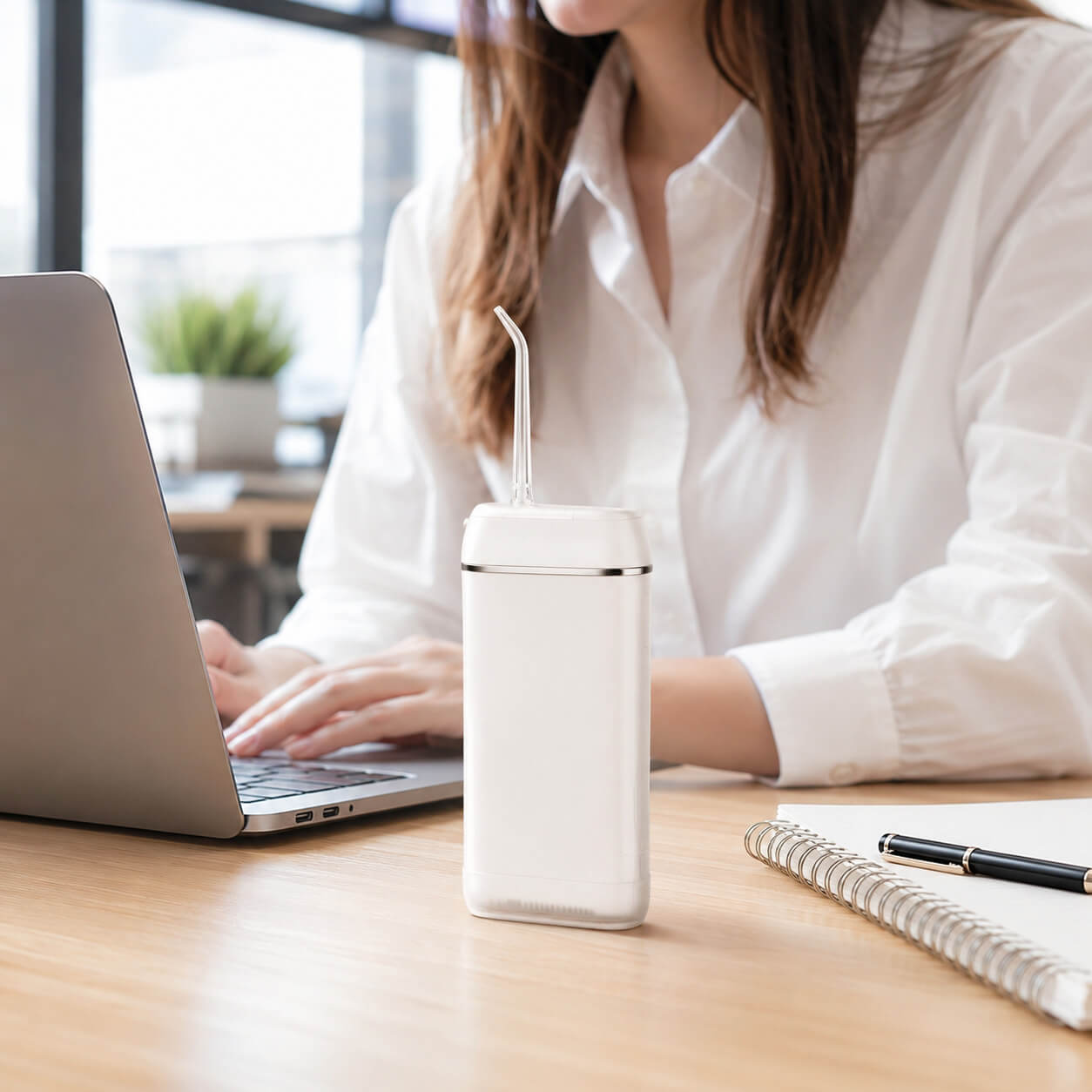
There are three customized modes: Soft, Pulse, and Strong. Patients can drop to Soft mode for aching gums. This is useful after wire tightening. They can scale up to Strong mode. This clears dense food debris after meals. Its patented telescopic structure shrinks. It is the size of a smartphone. It serves as a reliable travel companion. It guarantees orthodontic defense stays intact. Use it at school, the office, or on vacation.
(Prices may vary due to promotions. Please check the official website for the latest pricing.)
Frequently Asked Questions
1. Can a high PSI water flosser damage orthodontic brackets?
No. High-quality oral irrigators deliver up to 140 PSI. They use pulsating liquid streams. These are perfectly safe for dental hardware. The hydrodynamic force is non-abrasive. It lacks structural rigidity to bend archwires. It will not pop brackets off teeth. It only targets soft plaque and organic debris.
2. How often should you use a water flosser with braces?
Ideally, use your water flosser after every major meal. Braces trap food instantly. Leaving debris around brackets speeds acid production. Oral bacteria cause this acid. At a minimum, use your irrigator once daily. Do this during your evening routine. This ensures a sterile oral environment before sleep.
3. Is a portable water flosser powerful enough for orthodontic care?
Most standard portable models lack battery and motor stability. They cannot sustain high pressures. However, advanced engineering exists. The SYNHOPE M6P has an upgraded lithium battery. It maintains a consistent 140 PSI stream. This happens even when the water tank runs low. You get countertop-level performance in a pocket-sized footprint.